
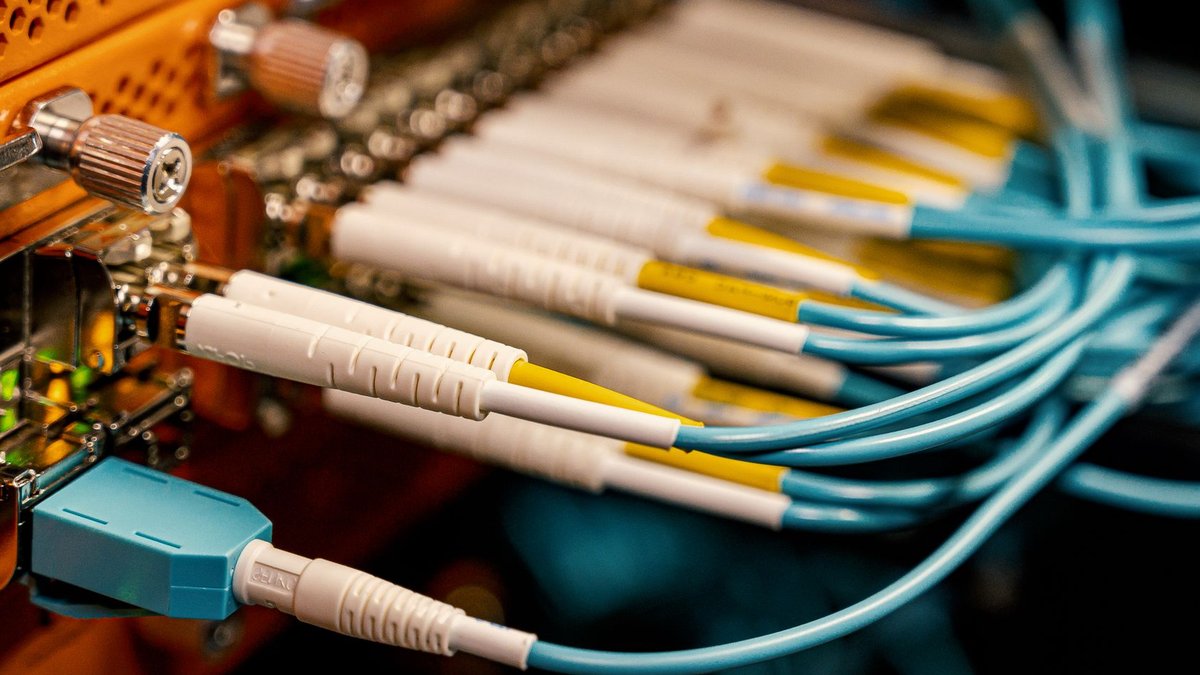
Avicena raises $100 million Series C to replace copper links with light in AI data centers, aiming to cut power use and simplify interconnects.
Why copper interconnects are hitting limits
AI data centers move data between accelerators, memory and switches billions of times per second. Copper wires currently carry most of this traffic, but they struggle with reach, density and energy consumption.
Each bit transmitted over copper consumes measurable power, and the short reach of copper cables forces many repeaters. The cumulative effect raises operating costs for large-scale AI workloads.
Memory modules feel the impact most sharply. Even fast chips can be throttled by the bandwidth ceiling imposed by copper links, limiting overall system speed.
Avicena’s LightBundle approach
The company’s LightBundle replaces copper and lasers with a dense array of microLEDs that launch light into multicore fiber. Silicon photodetectors collect the signal at the far end. By using microLEDs instead of traditional lasers, the system sidesteps the thermal management challenges that typically accompany high-speed optical transmitters.
Avicena describes the design as “wide-and-slow.” Instead of a few ultra-fast channels, it spreads data across many slower lanes, avoiding complex signal conversion and processing.
By keeping the link near compute and memory chips, the solution can serve both intra-package and inter-accelerator connections without bulky laser modules. Locating the photonic link directly adjacent to the silicon dies also cuts the trace length, which can improve signal integrity and lower overall latency.
Since August, Avicena has shipped evaluation kits featuring a 335-channel microLED array. Each channel runs up to 3 Gbps, delivering roughly 1 Tbps of raw throughput.
Funding and roadmap
The round was led by InterVest, with participation from Tiger Global, Cerberus Capital, SK Hynix Ventures, Samsung Catalyst Fund, AMD Ventures, Prosperity7 Ventures, Diamond Edge Ventures and Hitachi Ventures. John Dongwoo Ha of InterVest will join the board.
The $100 million raise exceeds the $65 million Series B round closed in May 2025. It also coincides with a leadership shift: Kevin Pope replaces Marco Chisari as CEO to steer commercialization.
The company has not disclosed any customer orders or production commitments. Scaling the evaluation links into a mass-produced product remains the next technical hurdle.


Leave a Reply