
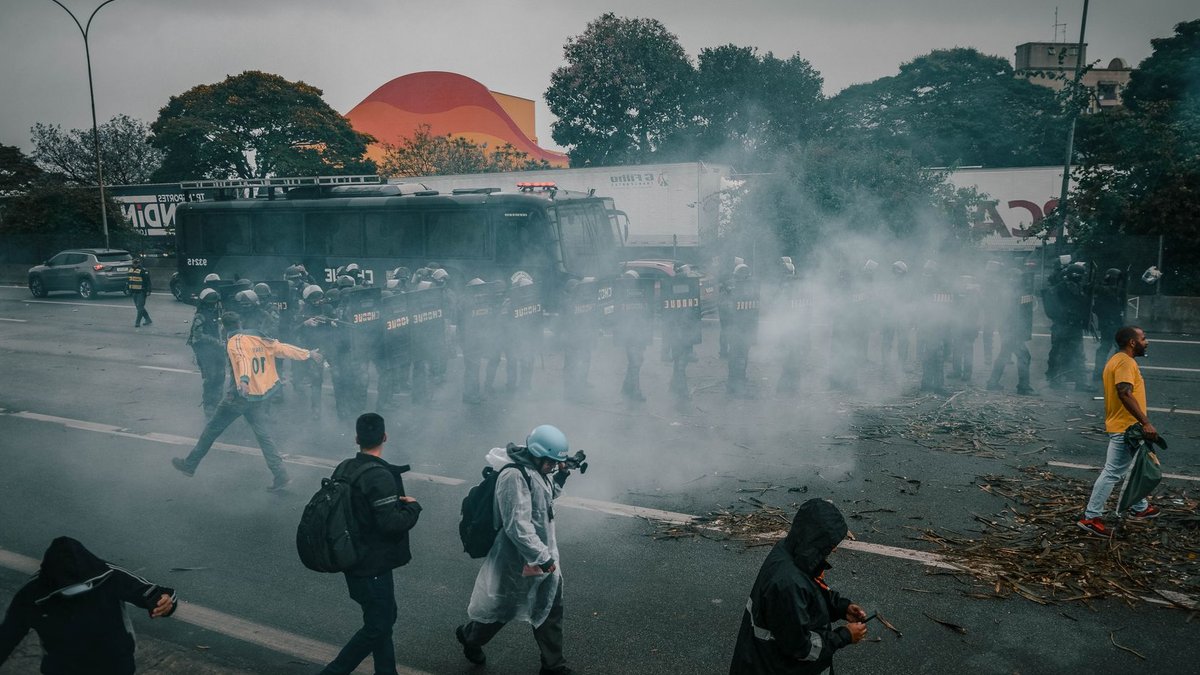
Wage protesters clashed with police in and around Dhaka on Sunday, as they demanded a monthly wage of Tk 30,000. The protests, which involved workers from the export industry, led to the closure of 529 factories and disrupted commuter traffic.
Industry sources reported that production was halted in these factories as workers took to the streets to agitate for their demands. The government has formed a wage board to re-fix pay for workers in the export industry, but the unrest continued despite this move.
Protests and Clashes
Wide-scale protests were held in garment-industrial belts in Mirpur, Savar, and Gazipur, triggering clashes with police, road blockades, and vandalism at several factories. Police fired teargas shells and sound grenades to disperse protesters in Mirpur, while paramilitary Border Guard Bangladesh troops were deployed in Gazipur to maintain law and order.
Workers stated that they were compelled to protest due to the difficulty of managing daily expenditures with their existing earnings, amid inflation-fuelled high prices of essentials. The situation had worsened since last Thursday, with a pause on Friday, and workers were demanding a wage hike and payment of dues.
Garment-factory owners suggested closure of factories under labour law provision 13 (1), meaning ‘no work, no pay’, if unrest continues on Monday. A total of 276 factories in Gazipur and Mymensingh, 68 in Mirpur, and 185 in Savar-Ashulia-Zirani areas could not operate on Sunday due to the protests.
At Mirpur-10, workers assembled and sealed off the intersection, causing traffic jams in nearby areas. When police tried to clear the road, protesters reportedly hurled bricks and stones, leading to a confrontation where officers used batons, tear gas, and flash-bang grenades to disperse the crowd.
The standoff lasted until about 11:45 am, with police and demonstrators chasing each other through the streets. During the chaos, a police vehicle was torched near the Mirpur-11 metro station, requiring firefighters to douse the flames. Among those hurt were several officers, including two women.
Authorities rerouted vehicles through back routes to reduce gridlock near Mirpur-10, and normal traffic flow resumed by 3:30 pm.
Read Also: Japan invests in Bangladesh economy
Around 8:30 am, protesters obstructed parts of the Dhaka-Tangail Highway, halting inter-district travel. In Konabari, demonstrators allegedly burned a police post and destroyed equipment inside.
Aftermath and Response
Bystanders reported that police deployed tear gas and sound grenades after being attacked with rocks and bricks. Later, garment workers in Savar blocked the Dhaka-Aricha Highway, worsening traffic delays.
A fire erupted at the scrap yard of Tropical Knitex Ltd in Gazipur’s Kaliakair during the protests. Firefighters were unable to immediately determine the cause or extent of the damage.
By mid-afternoon, traffic had mostly returned to normal after protesters lifted blockades from key roads and highways. Meanwhile, the Bangladesh Garment Manufacturers and Exporters Association (BGMEA) held an emergency meeting with factory owners to assess the unrest’s impact.
After the gathering, BGMEA president Mahmud Hasan Khan told reporters that owners feared prolonged disruptions and operational uncertainty. He stressed immediate priority to stop violence and restore normalcy, urging workers, labour leaders to act responsibly.
“Garment-factory owners would shut down their units under Section 13(1) of the Bangladesh Labour Act if labour unrest continues on Monday, as manufacturers struggle to maintain normal operations amid protests over wage increases.” The closure issue was discussed at the meeting where, concerned over repeated disruptions, members sought clear guidance from the association as to whether factories should remain open tomorrow.
The BGMEA president said they would take the decision of closure today (Monday), adding that none of them wants to keep factories shut. The BGMEA president also called on the government, particularly the Home Ministry, to ensure that anyone taking the law into their own hands faced legal action, irrespective of whether the person was a worker or an owner. He proposed that the newly formed Wage Board issue a joint public statement assuring workers and employers that it would work in the interest of employees, the industry and the national economy.


Leave a Reply