
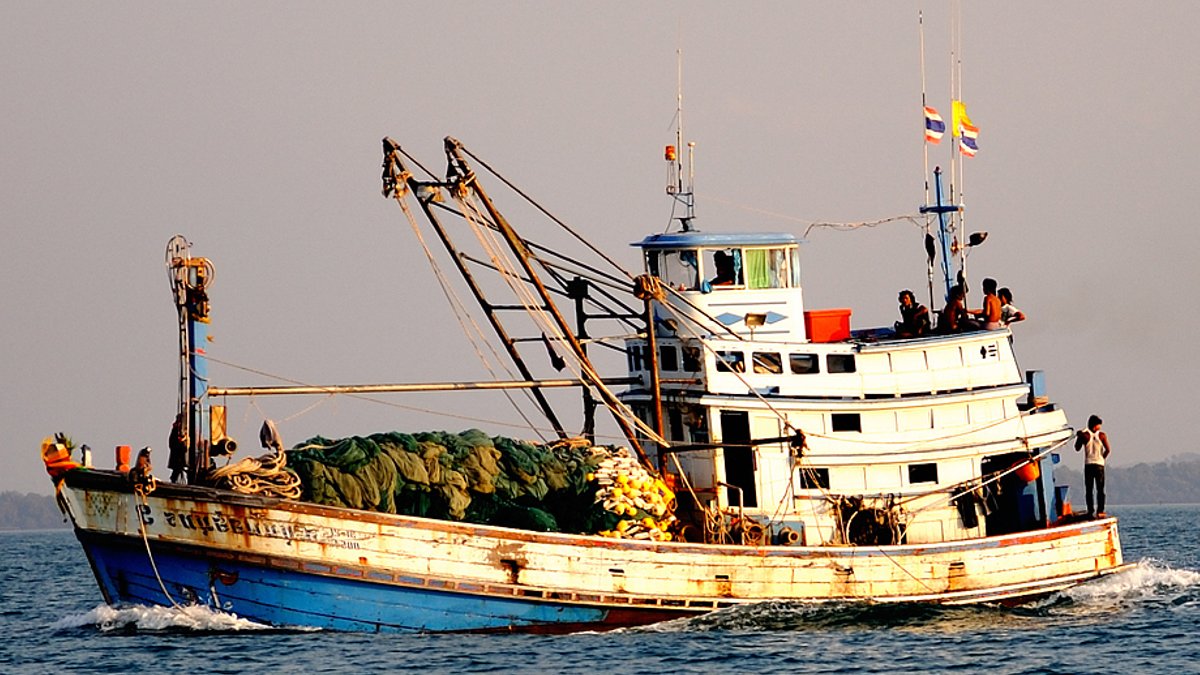
A popular TV show released on Netflix in June has reignited public debate about the serious problems that have plagued Thailand’s fishing sector for years. The Thai-language series Evil Lawyer depicts abuses in the seafood industry – one of the pillars of the Thai economy, given that seafood exports reached 369.6 billion baht ($11.32 billion) in 2024.
This has spurred claims that oversight of the sector has been weakened by recent law amendments and needs to be improved after years of vigorous efforts by the military regime that was forced to respond to European trade demands after it took power more than a decade ago.
Stricter regulations against illegal, unreported and unregulated fishing reduced the total fleet from over 50,000 vessels down to roughly 39,000 by 2018, but recently the industry has also struggled with increased fuel costs since the war in the Middle East and manpower shortages caused by conflicts with Cambodia.
In 2019, Thailand became the first Asian nation to ratify the International Labour Organisation’s Work in Fishing Convention, known as ILO C188, which applies to vessels weighing 30 gross tonnes or more.
Related: Taylor’s farewell fight to air on RTÉ
Groups monitoring the sector say loopholes in legal enforcement and policy rollbacks have been exploited by fishing boat owners, partly because smaller vessels don’t face serious labour audits, allowing them to evade port-in, port-out checks by using small, unmonitored shuttle boats to swap undocumented or abused crew members out at sea.
A formal debate over the fishing industry titled Who is the real devil in Thailand’s fishing industry? was held in Bangkok last week to highlight some of the troubling issues in this sector, with representatives from groups such as the ILO, the Environmental Justice Foundation, the Migrant Working Group (MWG), and Stella Maris Seafarers’ Centre using the forum to highlight problems.
They say Thailand still needs to ratify two more ILO conventions – numbers C87 and C98 – and that the country’s failure to do so could prevent it from reaching a free-trade agreement with the European Union.
Under Thai law, foreign migrant workers are barred from forming or leading their own trade unions, which the powerful fishing lobby has consistently rejected, and the list of issues includes the trafficking of migrant workers, forced labour, deceptive recruitment, debt bondage, and the sale of migrant workers.
Related: Applegreen invests in Naas electric vehicle hub
After the debate, Steve Trent, CEO and founder of the Environmental Justice Foundation, said Thailand needs to implement and enforce the ILO’s C188 convention, not just ratify it.
Conflicts in this region, and many other parts of the world, have ramped up challenges for countries everywhere, and the current Thai administration has no shortage of problems to consider.
The situation is particularly dire for people affected by the fishing industry’s issues, as they face not only exploitation but also the risk of being trapped in a cycle of abuse with little recourse or support.


Leave a Reply