
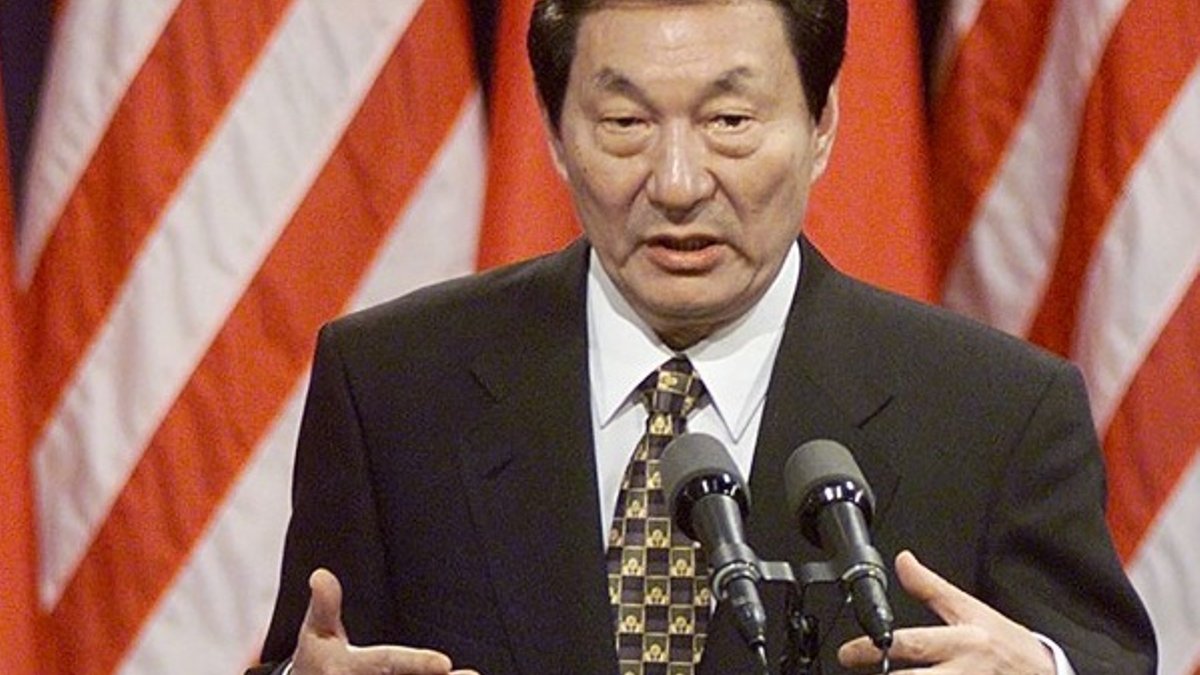
Former Chinese premier Zhu Rongji, whose market reforms and deft diplomacy helped drive the country’s extraordinary economic rise, died on Wednesday. He was 97.
ALSO SEE: Oil Producing States ‘Still Blocking Push for Global Plastics Treaty’
Zhu assumed the premiership toward the end of the 1990s and quickly proved to be a decisive and impactful free‑market advocate. His best‑known reforms involved the privatisation of unprofitable state‑owned enterprises, the conversion of urban housing into privately owned dwellings, and a vigorous push for home ownership. These measures unleashed a construction boom that eventually accounted for a substantial share of China’s output before a severe debt crisis emerged in the early 2020s.
He also led the country’s push into the World Trade Organisation, opening the doors to rapid and extraordinary economic growth and cementing China’s transition from a closed, centrally planned system to a major participant in the global marketplace.
Zhu passed away from illness in Beijing late on Wednesday morning “after medical treatment failed to save him”, according to Xinhua. “The life of comrade Zhu Rongji was a life of revolution, a life of struggle, a life of glory,” an obituary jointly issued by China’s top political bodies said, according to the state news agency. “It was a life dedicated wholeheartedly to serving the people, one given to the communist cause. His passing is a major loss for the Party and the country.”
Reforms unleashed runaway capitalism
Zhu was described in his obituary as “an outstanding member of the Communist Party of China, a long‑tested and loyal communist fighter… an outstanding leader of the Party and the state”. His brand of market reformism lifted millions out of poverty but also unleashed stark inequality, a legacy that fell out of favour after the ascent of Xi Jinping.
Reuters reported on Thursday that Zhu Rongji’s reforms still haunt the country because they created an economic model excessively reliant on real estate, exports, and local government debt, which originated from his structural changes.
Those policies also included aggressive shutdowns of loss‑making state factories, actions that produced long‑lasting imbalances that the current leadership continues to grapple with. Xi has condemned the excesses of that era and sought to steer China toward a more balanced development path, while also cracking down on ostentatious displays of wealth and on private firms and tech giants perceived as monopolistic, such as Alibaba’s Ant Group.
“We must turn our grief into strength, learn from (Zhu’s) revolutionary spirit, noble character and fine conduct, and rally even more closely around the Party Central Committee with Comrade Xi Jinping at its core,” Zhu’s obituary read.
The news of his death quickly shot to the top of trending topics on the social platform Weibo, with the discussion garnering massive attention within hours. One comment praised the premier as “the people’s good premier, go in peace”, attracting a large number of likes, while many users posted candle emojis in remembrance.
‘Common Prosperity’
In the latter half of Xi Jinping’s tenure, China has pursued a campaign to curb the excessive wealth of its richest citizens. In August 2021, President Xi launched the Common Prosperity initiative to narrow the wealth gap by limiting high incomes, encouraging corporate philanthropy, and reshaping the economy into an “olive‑shaped” society with a sizable middle class. State media framed the policy as a profound revolution aimed at redressing chronic inequality that had accumulated during decades of rapid growth.
The initiative sparked a sweeping regulatory crackdown that touched everything from big‑tech and gaming firms to private tutoring companies and housing prices, reflecting a broader effort to temper the excesses of the previous growth model.
US inflation dips in July
US consumer inflation slowed modestly in July, according to data released by the US Bureau of Labor Statistics on Wednesday. The slowdown was in line with economists’ expectations and offered a slight reprieve for households that have endured years of raised prices since the pandemic. Nevertheless, the pace remains well above the Federal Reserve’s long‑term target, leaving the central bank with limited room to maneuver ahead of potential rate adjustments.
Related: Green Transport and Tech Leaders Index Updated
The inflation data also carries political weight, as President Donald Trump’s Republicans face a stern test in the upcoming midterm elections, with Democrats seeking to wrest control of Congress by critiquing the administration’s handling of the world’s largest economy.
Energy prices decline
Inflation surged after the war on Iran began in late February, as Tehran’s retaliatory actions virtually blocked the Strait of Hormuz, a critical chokepoint for global energy supplies. Energy‑related price pressures peaked earlier in the year, but by July the overall energy index showed a downward trajectory, indicating that commodity prices were beginning to ease as diplomatic talks continued.
Core CPI, which excludes the most volatile food and energy components, rose at a modest pace, suggesting that underlying inflationary pressures were beginning to moderate.
‘Still too high’
Raised prices remain a central issue for the midterms. Democratic Senator Elizabeth Warren condemned the latest inflation figures, arguing that price growth outpaced wage increases and eroded real incomes. Recent official data showed that wage growth lagged behind inflation, meaning most workers were seeing their purchasing power decline.
In response, a White House spokesperson highlighted the slowing inflation as further proof that the administration’s long‑term agenda is delivering results. Meanwhile, grocery prices showed a slight decline over the month, providing some relief for households.
Analysts expect the data to give the US central bank breathing room on the timing of potential rate hikes, as several policymakers have signaled a need for caution.
Oil steady, Asian markets mixed
Oil prices stabilised on Wednesday after recent volatility tied to US‑Iran tensions. Pakistan’s interior minister was in Iran to discuss regional security, as Islamabad seeks to help mediate a resolution. The International Energy Agency sharply reduced its forecast for global oil demand this year, citing constrained supplies and high prices that deterred buyers.
Equity markets fluctuated ahead of the CPI release. Seoul posted a strong rally, recovering from earlier tech‑led losses, while other Asian indices such as Tokyo, Shanghai, Taipei, Manila and Jakarta posted gains. Conversely, markets in Hong Kong, Sydney, Singapore and Wellington moved lower.
Key figures around 1045 GMT
Brent North Sea Crude: DOWN 0.2% at $88.76 per barrel.
West Texas Intermediate: DOWN 0.1% at $83.08 per barrel.
Tokyo – Nikkei 225: UP 0.8% at 67,524.06 (close).


Leave a Reply