
China warned the United States on Tuesday that it would take “all necessary measures” to protect its economic interests if Washington proceeds with what Beijing called the “economic asphyxiation” of Iran. The statement came hours after the U.S. announced new sanctions targeting dozens of entities, including some in China, as part of a broader campaign to isolate Tehran financially.
Foreign Ministry spokesman Lin Jian told a regular news briefing that cooperation between China and Iran operates within international law and should not be disrupted. “China firmly opposes illegal unilateral sanctions,” he said. “China will take all necessary measures to firmly safeguard its own rights and interests.”
Sanctions target Chinese firms and shipping routes
The U.S. Treasury Department unveiled “Operation Economic Outcast” on Monday, a plan aimed at cutting off Iran’s financial lifelines by sanctioning nearly 60 entities, individuals, and vessels across multiple countries. Among those targeted were small independent oil refiners in China, known as “teapots,” which process Iranian crude, as well as shipping lines in China and Hong Kong.
The Office of Foreign Assets Control (OFAC) also issued a notice warning that companies paying “tolls” to ship goods or oil through the Strait of Hormuz could face penalties. The move expands secondary sanctions, which threaten to cut off access to the U.S. dollar system for any institution facilitating transactions tied to Iranian oil. When asked whether Chinese banks would be targeted, Treasury Secretary Scott Bessent said, “No one is above the reach of U.S. sanctions.”
Related: Former Premier Zhu Rongji Dies at 97
Despite the rhetoric, the latest sanctions list did not include any major Chinese financial institutions suspected of facilitating Iran’s oil trade. Analysts suggested the omission may reflect a desire to avoid escalating tensions ahead of Chinese President Xi Jinping’s planned visit to Washington next month.
For years, China has been Iran’s largest oil customer, and the two countries have deepened economic ties despite U.S. pressure. Beijing has repeatedly called for a ceasefire in the Middle East, arguing that sanctions only fuel instability. The Strait of Hormuz, a critical chokepoint for global oil shipments, remains a flashpoint, with Iran and the U.S. locked in a standoff over its control.
The sanctions also hit businesses in the United Arab Emirates, Singapore, and France, including a cooking-oil refinery. While the U.S. framed the measures as a way to curb Iran’s nuclear and missile programs, as well as its cyber operations, Beijing dismissed them as counterproductive. “Economic warfare and maximum pressure provide no solution,” Lin said. “They only serve to fuel tensions and disrupt the global economic and financial order.”
Iran’s economy under strain as rial hits record low
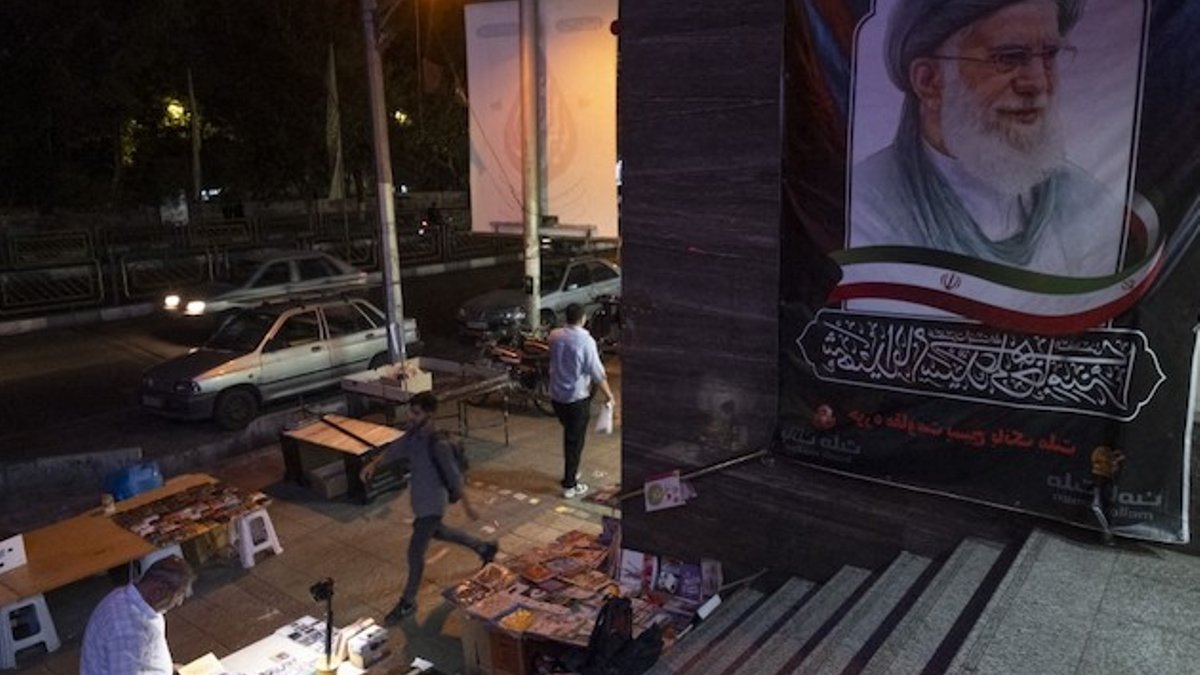
The Iranian rial plunged to an all-time low of 2.03 million to the U.S. dollar on Monday, reflecting growing anxiety over the impact of fresh sanctions. Long queues formed at petrol stations in Tehran on Tuesday, though some residents downplayed the immediate effects. “People are being hurt, both those who are financially well-off and those who are financially weak,” said Mehdi Yazdian, a 55-year-old realtor in the capital. “But our people are resilient. These sanctions have been in place for 47 years.”
Related: Green Transport and Tech Leaders Index Updated
Iran has weathered decades of sanctions by developing complex financial networks to evade restrictions. Before the latest escalation, it continued to export millions of barrels of oil, primarily to China. Senior Iranian officials have dismissed the U.S. strategy, insisting they have contingency plans to counter the measures. “The U.S. is not in a position economically to restrict Iran’s relations with other countries,” one official told state media.
Still, the economic pressure is mounting. Iran had already been grappling with soaring inflation before the war in Gaza reignited regional tensions. The conflict, now in its sixth month, has done little to ease the financial strain. Analysts note that while the U.S. Navy’s blockade of the Strait of Hormuz has limited impact—given Iran’s access to land routes and the Caspian Sea—sanctions on shipping and trade intermediaries could tighten the noose further.
For now, Iran’s leaders appear unfazed. But the human cost is harder to ignore. Protests over economic hardship peaked earlier this year, met with a violent crackdown that rights groups say left thousands dead. With no end in sight to the sanctions, ordinary Iranians are bracing for more pain.
Markets react with caution as oil prices dip
Global markets responded cautiously to the U.S. sanctions, with oil prices falling around 3% on Tuesday. Brent crude dropped below $90 a barrel, while West Texas Intermediate slid to $82.49. Investors appeared relieved that the measures were less severe than feared, avoiding direct action against major Chinese banks or a broader escalation in the Gulf.
Related: BMW iX3 Leads the Electric Pack
“European stock markets rebounded early Tuesday with some relief evident from the lack of any material increase in the economic pressure on Iran,” said Neil Wilson, an investor strategist at Saxo UK. The sentiment extended to Asia, where tech-heavy Seoul and Tokyo posted gains, though Hong Kong’s market remained flat.
The U.S. actions stem from the failure of negotiations to reopen the Strait of Hormuz, with neither side showing signs of backing down. While the Treasury Department said the sanctions would target Iran’s digital assets, technology, gold, aviation, and shipping sectors, it provided no timeline or additional details on specific countries beyond Iran.
Attention is now shifting to other economic developments, including Nvidia’s earnings report on Wednesday, seen as a key test for the AI sector, and the upcoming Jackson Hole symposium, where Federal Reserve officials will discuss monetary policy. With inflation still raised, markets are watching for signals on interest rates, particularly after the Treasury announced plans to buy back bonds to lower borrowing costs.


Leave a Reply