
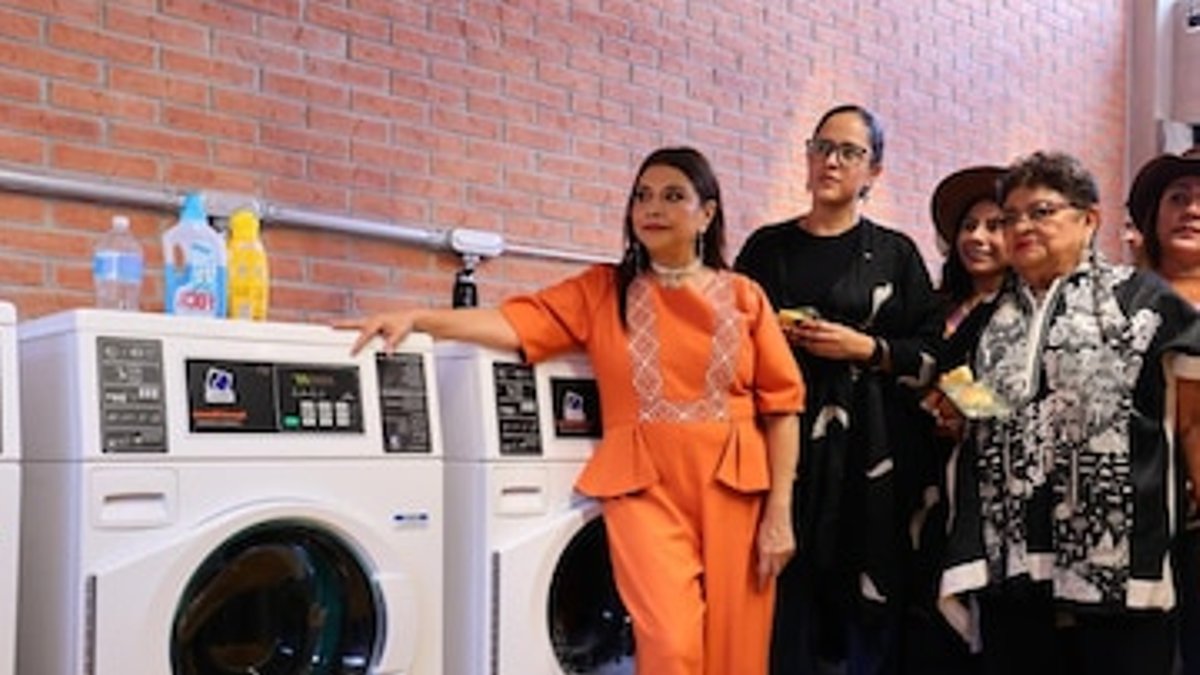
Clara Brugada inaugurated Centli, a massive urban complex in the Tlalpan borough of San Miguel Topilejo that blends agricultural preservation with public services. The project, known as the “Utopía del Maíz” (Corn Utopia), spans more than 50,000 square meters and required an investment of 253 million pesos. Officials say the site, once abandoned since 2007, now hosts a range of free amenities including a semi-olympic pool, sports courts, a skatepark, an auditorium, and clinical labs offering general medicine and mammography. The space also houses the Public Care System, featuring a childcare center, a day home for the elderly, a communal laundry, and a dining hall.
Centli derives its name from the Nahuatl word for corn, reflecting Topilejo’s status as a primary producer of the crop. Brugada explained that the government declared Mexico City a territory free of genetically modified corn, and this facility serves to protect local biodiversity. It includes a Seed House, a germplasm bank, and a laboratory designed to safeguard native seed varieties and monitor for transgenic species. The project is positioned as a form of social justice for the communities living on the city’s conservation land, which makes up 59 percent of the capital’s territory and provides roughly 70 percent of its water supply.
Brugada emphasized that all services within the facility are free. “In the Utopías everything is free,” she said during the opening. “You don’t pay to enter the pool, get medical attention, take a workshop, or practice any sport.” The complex aims to improve access to social rights for the population living in the conservation zone, which also supports 9 native corn races. The city maintains about 3,165 hectares of grain corn, producing over 4,000 tons annually, with Tlalpan being a key contributor to this agricultural heritage.
While the official description highlights infrastructure and crop protection, the practical reality for local families involves a trade-off between urban development and agricultural continuity. Residents of conservation zones often face restrictions on construction and resource use to protect the ecological balance, yet they receive these extensive amenities as a counterbalance. The dual focus of the facility—preserving a specific native crop while providing high-level recreational and health services—creates a unique environment where environmental policy directly intersects with daily community life.
Related: Best Time Tracking Software in 2026
The facility’s design demonstrates how agricultural policies can coexist with urban infrastructure. It ensures that areas dedicated to environmental protection still provide essential resources to their inhabitants. This balance is critical for maintaining the social fabric of these communities.
Access to these services represents a significant shift for the region. By removing financial barriers, the project aims to create a more equitable environment for all residents. The integration of health and recreational facilities directly supports the physical well-being of the community.
According to the filing, the government views this initiative as a necessary step toward sustainable urban planning. The project serves as a model for integrating social services into areas traditionally reserved for environmental conservation.


Leave a Reply