
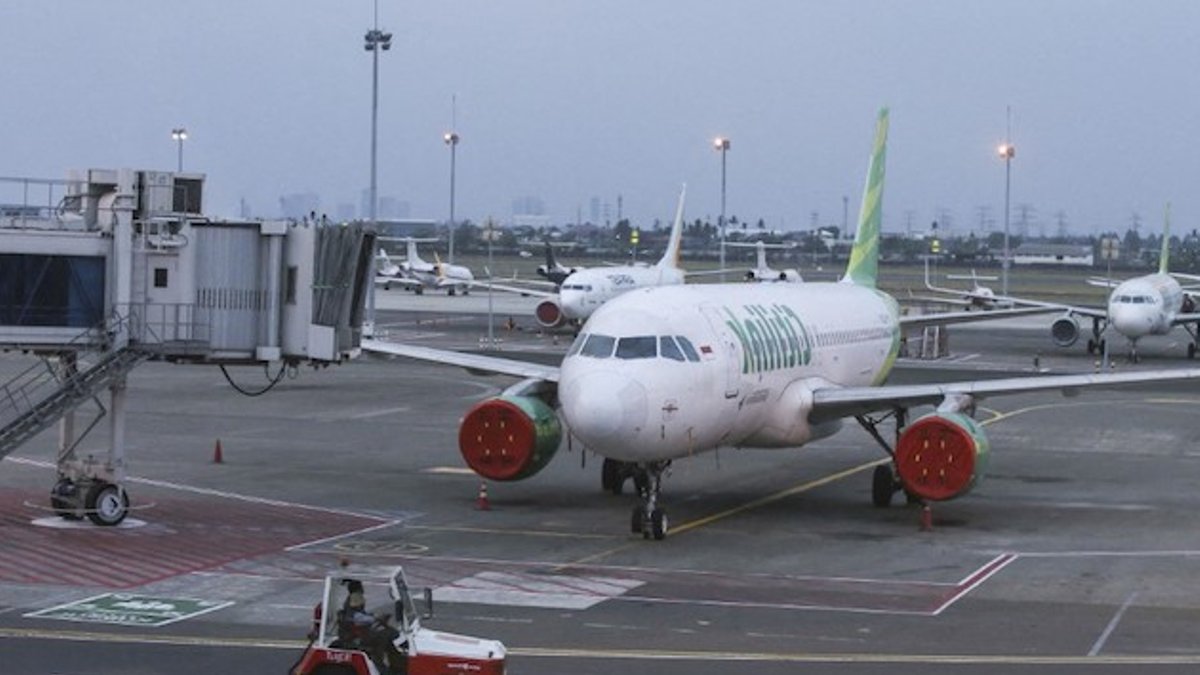
Mount Anak Krakatau erupted Saturday, forcing the closure of Indonesia’s busiest airport and seven others, stranding over 270,000 passengers. The eruption sent lava and ash into the airspace, disrupting flights across the region and leaving travelers scrambling for alternatives. Mount Anak Krakatau, located about 150 kilometers (90 miles) from Jakarta, spewed a fountain of lava and a dense plume of volcanic ash that spread across the Sunda Strait.
Eight airports halted operations over the weekend after volcanic ash was detected, according to the transport ministry. The closures included Soekarno-Hatta International Airport in Jakarta, which remained shut until 6 p.m. local time Monday. More than 240 flights were canceled or delayed, affecting nearly 30,000 passengers on Monday alone. These figures represent the cumulative operational impact since September 5, covering flights canceled, delayed, or diverted, the ministry stated.
The eruption of Anak Krakatau, a volcano in the Sunda Strait between Java and Sumatra, has raised concerns about further disruptions. The volcano, which emerged from the sea in the early 20th century, has been active since its formation in the caldera left by the 1883 eruption of Mount Krakatau. A 2018 collapse of part of the volcano triggered a deadly tsunami that killed 429 people and displaced thousands. The current activity has reignited fears about the volcano’s instability, particularly given its history of sudden collapses and tsunamis.
Efforts to Reopen Airports and Aid Stranded Travelers
The Indonesian government has prepared six alternative airports in areas like East Java, Central Java, and Yogyakarta to handle diverted flights. Transport Minister Dudy Purwagandhi encouraged airlines to use these options to ease congestion. Free bus services will be provided for passengers needing to transfer to other airports. At least four airports, including Jakarta’s Soekarno-Hatta and Halim Perdanakusuma, extended their closures until Monday evening, while another small airport in south Sumatra reopened early in the day.
For travelers like Michel Miegge, a 32-year-old Italian tourist, the disruption has thrown plans into chaos. Miegge and his girlfriend were due to fly home Tuesday but found their flight canceled. With hotels fully booked, they were unsure of their next steps. “We don’t have any news from the airline. We don’t know if we stay another day in Jakarta or find another flight,” the 32-year-old software engineer told AFP. “I don’t think it’s possible now. We found a nearby hotel, but we saw that many hotels were fully booked.”
Read Also: China Electric Vehicle Index Archives Opened to Public
The Indonesian geology agency warned Monday that the eruption threat remains high, citing risks from incandescent rocks and heavy ashfall. If the eruption continues, lava flows could pose additional dangers. The agency’s head, Lana Saria, emphasized that the probability of further eruptions remains significant, with potential hazards including the ejection of molten rock and prolonged ashfall disrupting air travel and daily life.
The closures have also led the government to relax overstay rules for foreign passengers affected by cancellations. The move aims to prevent legal issues for travelers stuck in Indonesia due to the volcanic activity. This flexibility extends to those whose visas may have expired as a result of the flight disruptions.
Volcano’s History Fuels Fears of Future Disasters
While the immediate impact has been severe, the eruption highlights broader challenges in managing natural disasters in a densely populated region. Indonesia sits on the Pacific Ring of Fire, making it prone to volcanic activity and earthquakes. The 2018 tsunami serves as a stark reminder of the risks posed by Anak Krakatau’s instability, particularly in coastal communities along the Sunda Strait.
The eruption has disrupted air travel, with no immediate signs of the situation improving. Thousands of passengers remain stranded as authorities continue to monitor the volcano closely.
UN Warns AI Could Be an Existential Threat
In other news, the United Nations rights chief warned on Monday that artificial intelligence could pose an “existential threat to humanity” – and demanded immediate action to reduce the risks. Speaking before the UN Human Rights Council, Volker Turk voiced alarm at reports of fully autonomous drones killing people in Ukraine, calling for an urgent ban on weapons that can kill without human involvement. Turk said he was “horrified by reports that fully autonomous drones launched by the Russian Federation killed three Ukrainians last month.” He said humans currently faced “unfamiliar, even unprecedented” threats to their rights.
Read Also: Asian Markets Rally
“The need for AI governance is widely acknowledged, but where is the action?” he asked, warning that “delay only benefits the massive tech companies, their owners and enablers.” Turk decried that “a handful of men has almost unlimited power over AI, which we are repeatedly told has unimaginable computing capacity.” “They talk about freedom, but on closer inspection, this turns out to be little more than the freedom to exploit our data,” the rights chief said.
Turk warned in particular that “AI that escapes its testing environment or blackmails developers to prevent itself from being turned off, is AI that is too powerful.” He appeared to be alluding to revelations in July that OpenAI agents had escaped supposedly controlled environments and had broken into servers of Hugging Face, a widely used platform where programmers share AI software. That episode shook the tech world and revived calls for tighter regulation and oversight of AI. Anthropic, Meta and other companies have reported similar incidents while testing agents.
“I share the concerns of industry insiders that advanced AI could pose an existential risk to humanity,” Turk said. “I am calling here, today, for an all-out effort to put cast iron guarantees in place around the safety and security of AI, before it is too late.”
The UN rights chief said he would be writing to AI companies in coming days “to urge them to take the steps that are within their control to reduce risks now.” At a minimum, he said, “we need countries hosting AI and those involved in its supply chains to come together around agreed red lines.” “We need independent verification, and much stronger collaboration on security within the industry,” he said. “We also need to consider the human rights impacts of AI on employment practices, on fundamental principles of democracy, and on our environment.”


Leave a Reply