
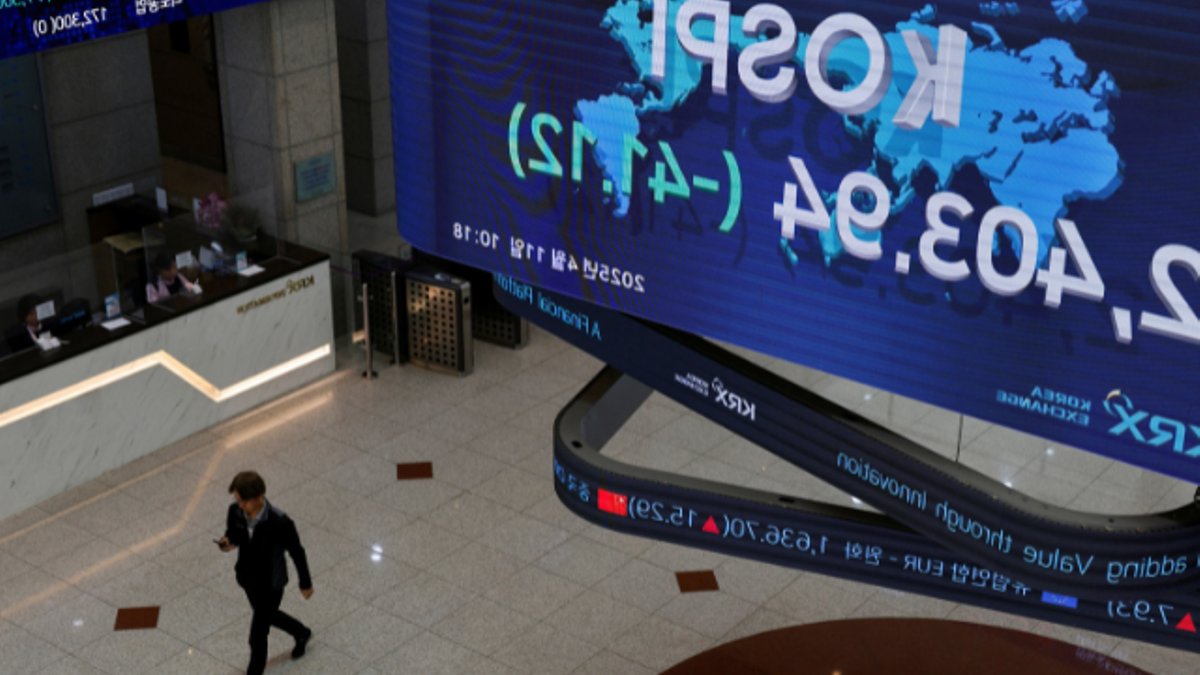
The Kospi index in Seoul has traded like a yo-yo this year, swinging between optimism and deep uncertainty. On Thursday, the market moved decisively downward, closing at 6,296.38. This represented a drop of more than 4.6%, marking one of the steepest declines of the week. The sell-off was driven largely by the semiconductor sector, which faced renewed pressure from investors. These firms are central to the global AI supply chain, yet their stock prices did not reflect their recent financial strength.
Two major players bore the brunt of the selling. SK Hynix shares plunged by 10%, while Samsung Electronics sank by over 6%. The immediate cause was not a drop in revenue, but a dispute over how the companies should handle their growing cash reserves. Investors are increasingly frustrated by the conservative payout policies of these memory chipmakers. They are demanding higher dividends and more aggressive share buybacks to justify their valuations.
The Cash Mountain Problem
According to the filing, the two giants are expected to hold a projected $263 billion in net cash by the end of this year. Despite generating record earnings driven by the AI boom, they have not announced plans for significant payouts. This has angered activist investors who argue that the firms are hoarding cash that belongs to shareholders. The dispute has forced both companies to promise enhanced payout policies. Previously, they had maintained conservative targets of returning only 50% of free cash flow to investors.
This tension highlights a shift in how markets value tech giants. For years, cash reserves were seen as a sign of financial health and a buffer against downturns. Now, with interest rates and inflation remaining a concern, investors want that cash returned immediately. The pressure on SK Hynix and Samsung is not just about one quarter’s earnings. It reflects a broader demand for tangible returns in a sector that has seen massive capital inflows. If these companies fail to adjust their strategies, the volatility in Seoul will likely continue, regardless of how strong the AI demand actually is.
Selling Spreads Across Asia
The weakness in Seoul was part of a broader trend across Asian markets. Global stocks diverged on Thursday as investors assessed corporate earnings and tech firm performance. In Tokyo, the Nikkei 225 lost nearly 1%, closing at 65,683.26. Chipmaker Kioxia fell by more than 10%, and Tokyo Electron dropped over 5%. The mood was soured by disappointing results from US tech giants SanDisk and Western Digital. These earnings raised questions about the profitability of massive AI investments.
Related Post: Four firms dominate DC asset market
Shares of SpaceX also fell sharply on Wednesday, further dampening sentiment. The company’s earnings results raised worries about huge spending on artificial intelligence infrastructure. Tech stocks had briefly rallied earlier in the week after a month-long rout that slashed billions from valuations. However, that rebound proved fragile. In Hong Kong, the Hang Seng Index declined by 1.5%. Selling was also observed in Wellington, Manila, and Taipei. Not all markets followed this trend, however. Shanghai, Sydney, and Singapore all saw their indices rise, suggesting a mixed picture across the region.
Oil Prices Await Middle East Clarity
While tech stocks fell, oil prices edged higher. Investors are watching developments over a potential US-Iran deal to reopen the Strait of Hormuz. This waterway is critical for global oil supply. Iran stated on Wednesday that it had agreed a route with Oman for ships transiting the area. Officials said they were adding final touches to arrangements for jointly managing the waterway. However, sources briefing Iranian media stressed that any reopening depends on the United States fulfilling its commitment. Tehran sees this as ending the naval blockade of its ports.
Brent North Sea Crude rose by 1.1% to $80.33 per barrel. The caution in oil prices reflects a market that needs confirmation. Kathleen Brooks, research director at traders XTB, noted that the market needs assurance from the White House. She described the current prospects as a potential “false dawn” without clear verification. Investors are also waiting for key US jobs data to be released on Friday. This data will provide insight into the state of the economy as the Federal Reserve plots its next moves on borrowing costs.
Figures released on Wednesday showed that hiring in the US private sector was significantly below expectations in July. Industries such as leisure and hospitality were shedding jobs. This data adds another layer of complexity for investors. They are balancing tech earnings, geopolitical risks, and macroeconomic signals. The Dow Jones index in New York ended the session up 0.5% at 54,349.12. In Europe, London, Paris, and Frankfurt all closed higher. The FTSE 100 gained 0.1%, while the CAC 40 rose 0.6%. The DAX in Frankfurt was up 0.3%. The dollar strengthened slightly against the yen, trading at 157.92 from 157.79 the previous day.


Leave a Reply