
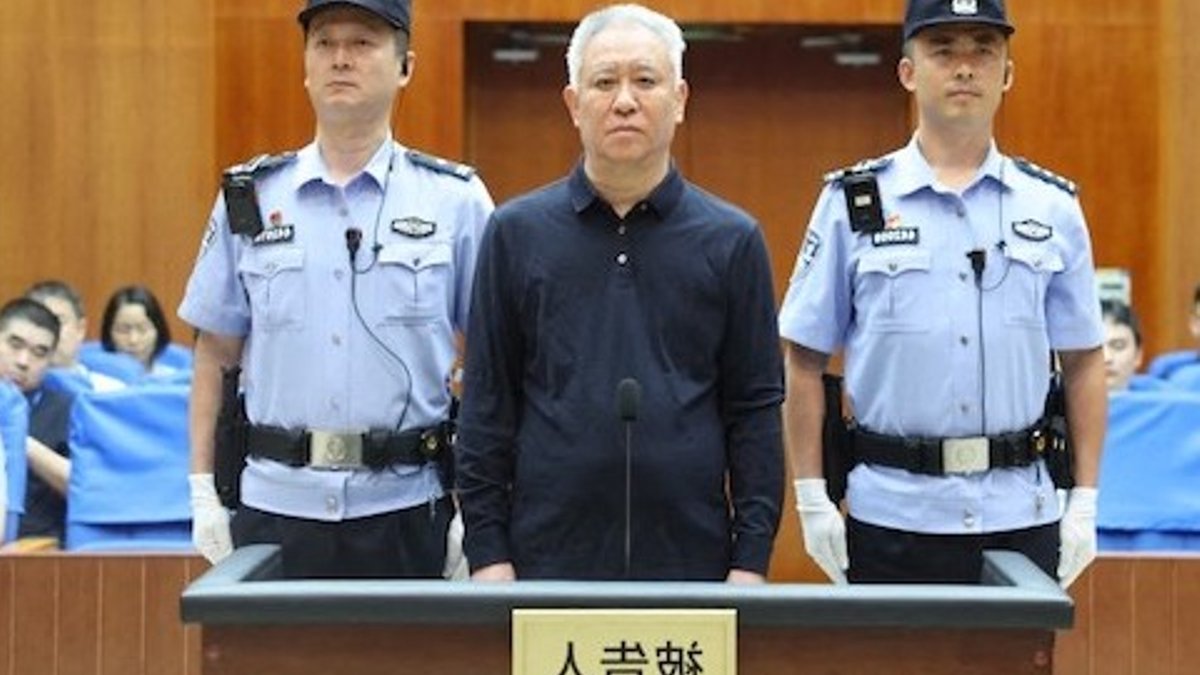
China Evergrande’s founder, Hui Ka Yan, has been sentenced to life in prison and his company fined over $2.4 billion for multiple crimes, including “large-scale financial fraud.”
The court’s decision comes after a long and complex process, with Hui Ka Yan pleading guilty to charges of fraud and bribery in April.
Evergrande Group was once a leading property developer in China, but it defaulted in 2021 after struggling to repay creditors.
The company’s collapse has had a significant impact on China’s economy, with new-home prices contracting for three years.
Sentence and Fines
The court fined Evergrande Group and its real estate arm a total of 15.82 billion yuan ($2.4 billion) and sentenced Hui Ka Yan to life in prison.
The court also ordered that remaining shortfalls from illegal gains be returned, with the company having collapsed with over $300 billion in liabilities in 2021.
Hui Ka Yan‘s sentence includes the revocation of his political rights for life and the confiscation of all his personal property.
Impact on China’s Economy
The verdicts are seen as a signal that the central government will not bail out the property sector, with Dan Wang, a director on Eurasia Group’s China team, saying that companies must be “debt-conscious.”
China’s leaders are seeking to spark new life into an economy that has faced slowing growth for years, with a target of GDP expansion this year of between 4.5 and 5.0%.
The data for July showed retail sales declining compared to last year, with a pronounced decline in the property sector.
Investment in real estate development was down by nearly one-fifth year-on-year through the end of July.
Broader Implications
The crisis in China’s real estate market has heavily impacted the country’s economy, with Alicia Garcia-Herrero, Asia-Pacific chief economist at Natixis, saying that Evergrande helped make the problem more structural.
The debt struggles of Evergrande and other property giants have had a severe impact on consumer confidence, dissuading many would-be homebuyers from making purchases.
Beijing is attempting to manage deep-set issues in the property sector while minimizing turbulence for the domestic economy.
The situation is complex, with many economists arguing that China must shift towards a growth model powered more by domestic consumption than investment in real estate and infrastructure.
While the government works to stabilize markets, scrutiny continues regarding supply chains. Recent global documentaries have shed light on labor standards within certain Asian seafood industries, raising questions about broader regulatory oversight. Thai Fishery Abuses Exposed on Netflix Series details specific cases of exploitation that highlight the challenges of enforcement.


Leave a Reply